Creative Writing and Editing Philosophy
“I’m going to write a book”
“Um okay lol”
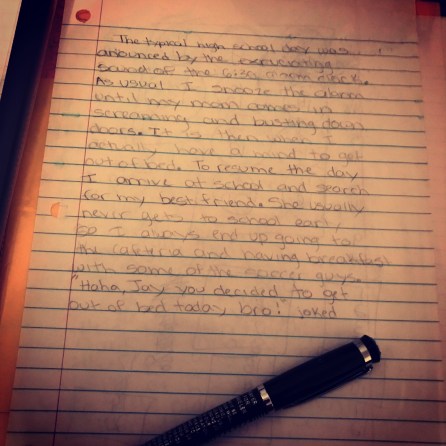
That is the conversation that sparked my creative writing career in 2012. It has been a journey. There has been a lot of doubt and lack of confidence during that time period. But what I have learned over the course of the last several years is that overcoming those doubts and overcoming one’s one self-criticism will eventually lead to the ability of shutting up the internal criticism and focus on the goals one places on himself or herself! There has been a lot that I have learned about the craft of creative writing, and I wish to share some of that information in order for other to understand the struggles of writing.
Writing is difficult; that is something that a lot of us think as we stare at the blank page before us. How much harder is coming up with a story from scratch? Imagine writing the first novel in a twelve-novel long series. The pressure is immense, and it does not help that the tiny voice inside our heads is doing everything but encouraging us. When I first began writing, I did not even worry about that voice. I miss that time when I was in some sort of honeymoon writing period. But as time passes, one learns to push through the doubt and get the story out. It wants to come out! We just have to persevere!
1. Write the First Draft!
The first thing I learned and what I constantly have to tell myself is, “Just write the damn thing!” From my personal experience, I have learned that if I do not complete the first draft of a story because I keep going back to the first chapter to get the “perfect” introduction, I will eventually get discouraged and loss the writing project to the side. First drafts suck! They are not good. But think about it. You are writing something completely new that no one else has access you! You are creating an new world perhaps! That isn’t easy. And chances are, your ideas are going to get all mixed around. Think of your first draft as a puzzle you take out of the box. All the pieces are mixed all around, but what you have to do when you first take the puzzle out of the box is to make sure all of the pieces are facing up so you know what that piece is holding. That first step of preparing yourself to build the puzzle is your first draft. Editing will tackle the piecing together part of the puzzle.
2. Limit Your Focus
Now, what this section heading may be misleading. Don’t misunderstand what I am trying to say. I do not mean in a way way to be narrow-minded or to not be open to new ideas. By all means, be open to those ideas! You never know what came come about from those crazy, wild ideas you are having. What I mean by limiting your focus is to not be working on so many different projects at once. Chances are, you will end up neglecting projects, abandoning them, or feeling overwhelmed and thinking of your writing as a job or as homework. I recall a time when I was would not stop beginning new stories. It got to the point that I had about seven or eight stories started, and none of them were going anywhere because I was too overwhelmed to work on any of them. I didn’t know where to start! Eventually, I had to walk away from it all, and pull one story. I pulled that one story and completed the first draft for it. If I had not done that, I don’t think that first draft would even be done at this point. I believe that by now I would have like thirty stories, because something new always comes up that I want to write. Limit yourself to what you can handle. If you can handle writing two stories at once, great! If you can do five, awesome! But if you can only focus on one at a time, that is okay. That is actually my preference at the moment.
3. Note-Taking, Outlining, and Drafting
This vary from person to person. Some people draft every chapter, section, character, scene, etc. before even beginning the novel. If that is you, awesome! I, however, am not like that. I like to just jump in and see where the story takes me. What I do, is I write down the entire first draft, taking notes of important characters and scenes as I go along, and do not focus on outlining until I prepare myself to tackle Draft 2. Again, this varies from person to person, but the idea here is that one should not force themselves to outline or draft or just jump in if they are not comfortable doing it. You must find what best suits you and allows you to create the best version of your story as possible.
4. Don’t Edit Until the End
Writing and editing are two things that I hold dearly. I love to edit because editing provides me with the opportunity to really figure out what I can make of the crappy first draft! But my philosophy is to never edit anything that is incomplete. I will not look at anything I have written until the draft is complete. Now, one might thing that for long projects that is impossible. However, I find that it is necessary! I HAVE to finish writing a full draft before editing any part of it. If not, the internal critic that tells me to just give up will not allow me to move beyond what is written down. I have found myself getting lost and even discouraged if I don’t push through and get the entire draft written. For that reason, I encourage others who are beginning writers to do the same; just write the first draft. Silence the inner critic within you that constantly shouts that what you are writing is awful, that you are wasting you time, that no one will ever read this, and that you just just give up. Don’t do it! My outlook on writing is that it is only as complicate as you make it for yourself. If you can’t get yourself to sit down and write, it is never going to get done. From my experience, doubt is a part of writing. But it’s what you do with that doubt that creeps up on you that will define how far you will make it as a writer.
Writing Tips:
These are some of the tips I have picked up along the way. I have heard these multiple times throughout my studies and are tips that I have utilized myself to help me tackle writing projects.
- Journal Keeping: When starting to write, I found it important to keep a notebook handy. The journal will help train someone to write on a daily basis, no matter how much one invests daily. The important point in journal keeping is to develop the habit of writing everyday. For more information about Journal Keeping, you may reference Janet Burroway’s Writing Ficiton: A Guide to Narrative Craft (4th Edition).
- Practice Free Writing: Free writing is when a tactic that allows one to sit down and just start writing. It doesn’t matter what gets written. The idea is to get something down on paper.
- Clustering: Clustering acts a way for one to associate a word with a net of other words. This tactic begins with drawing a circle in the center of a page, writing a word in that circle, and then writing down all other words one can associate with the word in the middle.
For more information about Journal Keeping, Freewriting, and Clustering you may reference Janet Burroway’s Writing Ficiton: A Guide to Narrative Craft (4th Edition).
Creative Writing References:
Below is a list of creative writing books that I have studied that have allowed me to understand the craft and be able to study my own writing. Along with reading novels in the genre that I writing in, I find that learning about the craft of creative writing is just as important. Throughout my undergraduate and graduate studies, I have compiled a list of creative writing references that have helped me understand the craft.
- A Field Guide to Writing Fiction by A. B. Guthrie, Jr.
- Correct Writing (6th Edition) by Eugenia Butler, Mary Ann Hickman, Patricia J. McAlexander, and Lalla Overby
- Fiction: A Pocket Anthology (7th Edition) by R. S. Gwynn
- Poetics by Aristotle
- Points of View: An Anthology of Short Stories edited by James Moffett and Kenneth R. McElheny
- Sanderson’s Fiction Writing Manual by Jim Sanderson
- The Art of Fiction: Notes on Craft for Young Writers by John Gardner
- The Rhetoric of Fiction (2nd Edition) by Wayne C. Booth
- The Writing Room: Keys to the Craft of Fiction and Poetry by Eve Shelnutt
- Writing Fiction: A Guide to Narrative Craft (4th Edition) by Janet Burroway
- Writing Fiction: A Guide to Narrative Craft (9th Edition) by Janet Burroway, Elizabeth Stuckey-French, and Ned Stuckey-French
 H. J. Ortiz